Building Beyond 2035: The Midlands' Contractor Agenda for the Next Decade
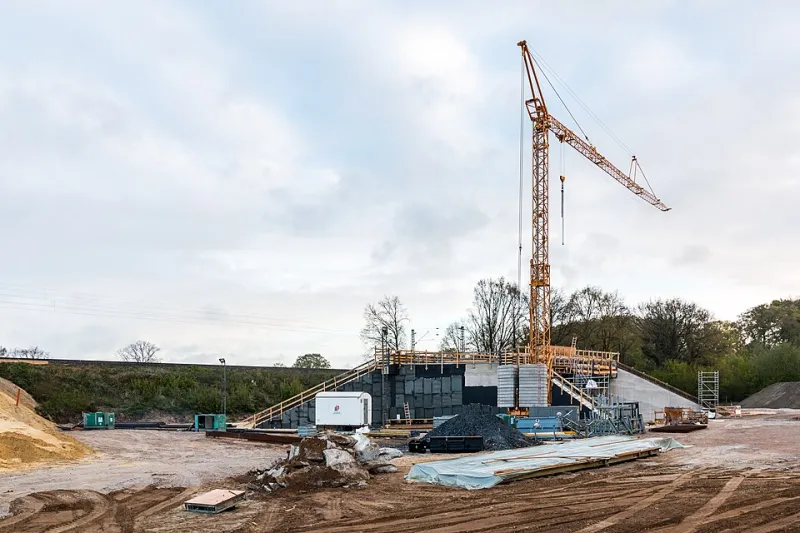
Photo: Dietmar Rabich, CC BY-SA 4.0, via Wikimedia Commons
The Midlands construction sector stands at an inflection point. With major HS2 stations taking shape at Curzon Street and Old Oak Common driving demand along the corridor, and the West Midlands Combined Authority pressing ahead with an ambitious brownfield-first housing agenda, contractors across the region are being asked to deliver more — faster, greener and with a workforce that is thinner on the ground than at any point in recent memory.
Ahead of this year's Midlands Construction Summit, we spoke to contractors, developers and local authority leaders about what the next ten years must deliver for the region's contractor base to thrive rather than merely survive.
The HS2 Legacy: From Project to Pipeline
For many in the sector, the question is no longer about HS2 itself but what follows it. "The supply chain capability that's been built around the Birmingham delivery partners is a once-in-a-generation asset," says one senior commercial director at a Solihull-based civil engineering firm. "If we don't convert that capability into local frameworks, regional contracts and long-term pipelines, we'll lose it to other regions and other sectors."
The numbers underline the concern. Thousands of workers have been upskilled through HS2-linked programmes across the region, and local authorities are now under pressure to ensure that expertise in rail infrastructure, heavy civils and complex station environments translates into housing, commercial and public sector work closer to home.
Delegates at the Summit can expect this to be a central theme: how the region converts a national infrastructure project into a durable regional pipeline.
Brownfield First: Opportunity and Constraint
The West Midlands' brownfield regeneration push — with tens of thousands of homes earmarked for previously developed land across Birmingham, Wolverhampton, Coventry and the Black Country — represents both the region's greatest opportunity and its most practical challenge.
Remediation costs, unpredictable ground conditions and fragmented land ownership all complicate delivery. "Every brownfield site is bespoke," notes a regeneration lead at a Midlands housing association. "Contractors need to be sharper on early-stage risk, and clients need to be realistic about what that costs."
Modern methods of construction (MMC) and modular building techniques are frequently cited as part of the answer, particularly for constrained urban plots where traditional builds face logistical headaches. But the sector remains divided on how quickly MMC can scale in a region where traditional brick-and-block delivery still dominates.
The Skills Equation
No conversation about the next decade gets far without addressing workforce. The Construction Industry Training Board continues to forecast significant annual recruitment needs across the UK, and the Midlands — with its dense concentration of SME contractors — feels that pressure acutely.
Several themes emerged from our conversations:
- Retention over recruitment. Firms are shifting investment from constant hiring towards keeping experienced tradespeople, with flexible working and clearer progression pathways.
- Green skills. Retrofit, heat pump installation and low-carbon materials handling are becoming core competencies rather than niches.
- Digital literacy. Building Information Modelling, drones and AI-assisted estimating are filtering down from tier-one contractors to smaller firms.
"The firms that invest in digital and green capability now will be the ones winning work in 2030," one regional contractor observed. "The ones that don't will be subcontracting to them."
Materials, Cost and Certainty
Material price volatility has battered contractor margins in recent years, and while conditions have stabilised, procurement practices have been permanently altered. Early supplier engagement, longer framework agreements and greater use of regional supply chains are all gaining traction.
Investment certainty remains the wider concern. Contractors consistently point to stop-start public sector funding cycles as the biggest brake on long-term planning. A stable, clearly signposted regional pipeline — with commitments spanning multiple parliaments — is perhaps the single most valuable thing decision-makers could deliver for the Midlands contractor base.
A Region With Momentum
Despite the headwinds, there is genuine optimism in the region. The concentration of universities, testing facilities and manufacturing expertise in the Midlands gives it a credible claim to leadership in construction innovation. The question for the next decade is whether policy, investment and industry will move in step.
These themes — skills, materials, investment and the HS2 legacy — will be examined in depth at the Midlands Construction Summit, where contractors, clients and policymakers will come together to shape the region's agenda through 2035.