Before the First Handshake: How a Venue Speaks Volumes About a Summit
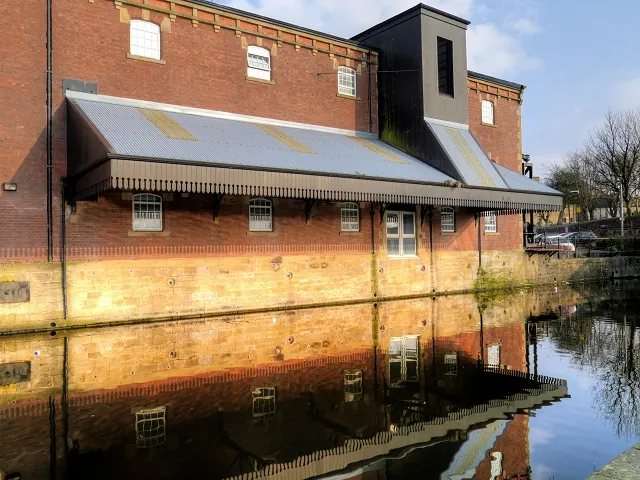
Photo: David Dixon , CC BY-SA 2.0, via Wikimedia Commons
Every conference begins hours before its stated start time. For the Midlands construction professional, the judging starts the moment the sat nav announces arrival — and by the time a lanyard is collected, a verdict has quietly been reached.
It is a truth organisers acknowledge freely: the venue is the first exhibit at any trade event. And in a region as self-aware as the Midlands — proud of its industrial heritage, wary of being patronised by the capital — that first impression carries more weight than it might elsewhere.
The Commute Is the Opening Act
Ask veteran delegates what makes or breaks a regional summit and the answers are refreshingly unglamorous. Parking. Signage. The distance from the car park to the registration desk in the rain.
"We're a practical trade," says one Derby-based civil engineering director who has attended every summit since the event's inception. "If I've circled for twenty minutes looking for a space and then queued fifteen for a coffee, I've already decided the organisers don't understand my day. We plan logistics for a living. We notice."
Organisers of past summits confirm the pattern. Delegates arrive early, often having travelled from Nottingham, Stoke or Worcester before the morning rush fully builds. The venue that handles a 7am influx smoothly — clear wayfinding, hot food available before nine, registration that doesn't bottleneck — buys goodwill that no keynote speaker can manufacture.
Brick Character Versus Bland Efficiency
Then there is the subtler question of what a building says. The Midlands offers two broad temptations: the purpose-built exhibition centre, all clear spans and loading bays, and the repurposed industrial relic — the Victorian goods shed, the converted railway warehouse, the former foundry hall.
Delegates, it turns out, have opinions. A generic exhibition hall is trusted for its practicality: generous floorplates, reliable power, freight access that exhibitors dream about. But it is emotionally anonymous. A restored brick shed, with its iron columns and natural light, does something different — it flatters the industry's sense of its own story.
"There's an unspoken prestige in hosting a construction summit inside a building our predecessors actually built," one event consultant observes. "It's a quiet argument that this region makes things, and always has. Delegates photograph the ceiling before they photograph the speakers."
The trade-off is real. Older venues can mean awkward pillar positions on the show floor, temperamental heating and catering served from improvised kitchens. Exhibitors with heavy plant displays often quietly prefer the modern option. The ideal, most agree, is a venue where heritage and function coexist — and the Midlands is unusually rich in candidates.
What the Rankings Actually Show
Strip away the romance and delegate feedback from past summits clusters around five priorities, in roughly this order:
- Access by road and rail — proximity to the M6, M42 and M1, and a station within a short taxi ride.
- Flow — wide aisles, sensible seminar room placement, catering points that disperse crowds rather than concentrate them.
- Catering capacity at peak — nothing damages an event's reputation faster than a forty-minute lunch queue.
- Character — a building with a story, ideally an industrial one.
- Value to exhibitors — straightforward loading, fair rigging costs, and organisers who treat standholders as partners rather than line items.
Notably, glamour ranks low. Delegates are not seeking marble lobbies; they are seeking efficiency with a sense of occasion.
A Mirror Held Up to the Industry
The deeper point, several organisers argue, is that venue choice is a statement of self-image. Opting for a glassy national chain venue suggests an event chasing a generic corporate template. Choosing a Midlands industrial landmark — a Derwent Valley mill, a Birmingham Jewellery Quarter conversion, a Nottingham lace hall — stakes a claim: that this region's construction story is worth telling in its own architectural language.
"The venue is the first thing we negotiate and the last thing delegates forget," as one summit committee member puts it. "Get it wrong and every other element works uphill. Get it right and people arrive already inclined to think well of us."
For an industry that spends its days weighing cost against quality, the calculus is familiar territory. The venue, like any build, is judged on whether it does the practical job well — and whether it says something worth saying while doing it.
As plans for future summits take shape, that 6am arrival in the car park will remain the truest test. The doors, the keynotes and the deals all come later. The verdict, as ever, will already be in.