Forty-Eight Hours and One Cup of Tea: The Woman Turning an Empty Hall Into a Summit

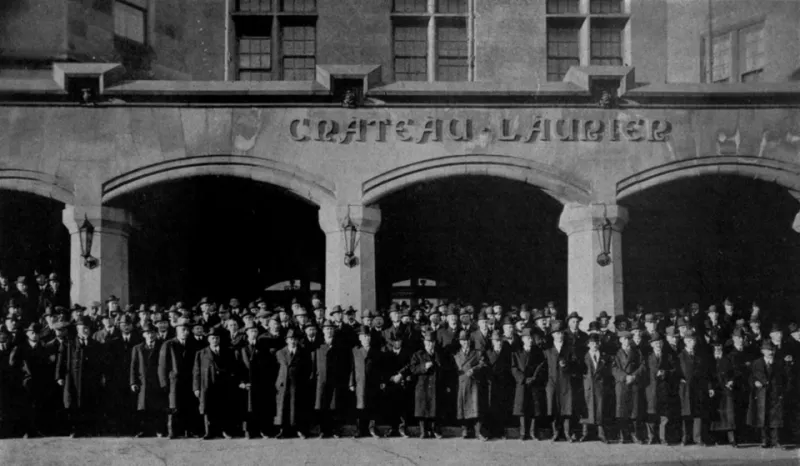
Photo: מקף־עברי, CC0, via Wikimedia Commons
The Hall at Half Four
The National Exhibition Centre has seen busier mornings, but few quieter ones. At 4:20am, Hall Three is a cavern of folded chairs, shrink-wrapped staging and one lonely floodlight. Elaine Whitcombe, site manager for the contractor delivering this year's Midlands Construction Summit, unlocks the roller shutter with a key fob, checks her watch and delivers her opening verdict on the day ahead.
"Two days, four hundred tonnes of kit, one rule: it has to look effortless by seven o'clock Thursday morning."
Whitcombe has run event builds across the region for fifteen years — hotel refits in Birmingham, a temporary hospital annex in Coventry, three consecutive party conference fit-outs. But a construction industry summit, she says, is the one crowd she cannot bluff. "They notice everything. If a cable run looks untidy, half the room has an opinion on it."
Hour One: The Power Map
The first task is never the stage. It is electricity.
By 5:15am, Whitcombe's electricians are tracing floor boxes against a marked-up plan that looks, to the untrained eye, like a circuit diagram for a small town. Sixty exhibitor stands, each needing 16-amp supplies; a keynote stage with lighting, sound and live-streaming rigs; a catering zone with urns and chillers; and — the item circled three times in red — resilient wifi backhaul that cannot share a circuit with anything that might trip it.
"Power is where builds go wrong," she explains, walking the grid with a clipboard. "Everything else can be moved. If your distribution board is in the wrong corner at six in the morning, you're re-cabling the whole floor in front of two thousand visitors."
Her crew of eleven — two electricians, four riggers, a comms specialist, a forklift operator and three general hands — work to a schedule laminated on the back of her clipboard. The laminate is a habit from a career spent in environments where paper doesn't survive.
The Build Order Nobody Questions
There is a near-sacred sequence to any exhibition transformation, and Whitcombe recites it the way a site agent recites a method statement:
- Mark the floor. Chalk lines for every stand, aisle and fire exit, measured twice against the CAD plan.
- Services first. Power, data and water runs before anything heavy lands on top of them.
- Back-of-house in. The keynote stage, because everything else is built around sightlines to it.
- Perimeter stands. Biggest and slowest to assemble.
- Central island stands and registration. Last, so the forklifts still have room to work.
"Every exhibition crew knows this order," she says. "The skill is knowing when to break it — and today we're breaking it, because the keynote screen arrived early and I'm not leaving a £40,000 LED wall in a van."
Problems You Can't Plan For
By 11am the hall has a shape: staging up, truss rigged, the first twenty stands taking form. Then comes the call Whitcombe was expecting.
A main contractor exhibiting from Nottingham has downsized its stand overnight — a project delay, they explain apologetically. The empty 8-by-6 metre plot sits in the middle of the networking zone like a missing tooth.
Her solution takes nine minutes: she reallocates the space to the summit's skills workshop area, moves two seating pods forward, and radios the floor plan change to the organisers. "You keep a couple of flexible zones in your back pocket every year," she says. "Somebody always shrinks, somebody always grows. You just decide which one you can absorb fastest."
It is, she reflects, not so different from the work her audience does daily. "Same weather, same subcontractor no-shows, same client changing their mind. We just do it in forty-eight hours instead of forty-eight weeks."
The Detail Delegates Never See
By the evening of day two, the transformation is nearly complete. Aisle carpet is down. Signage hangs plumb. The wifi SSID is live and being stress-tested by a technician pacing the hall with a laptop and a look of quiet suspicion.
Whitcombe's final walk-through is forensic. She checks that every fire exit is clear and signed, that the accessible route from registration to the keynote stage is step-free, that the water station near the exhibition aisles has a drainage mat beneath it. She straightens a banner by two millimetres. Nobody will notice. That, she says, is the point.
"The best compliment a build can get is silence. If delegates spend Thursday talking about the speakers and the deals, we've done our job. If they talk about the floor — we've done it wrong."
At 9:40pm she signs off the hall, photographs it for the record, and puts her phone on charge for the first time since dawn. The summit opens in nine hours. Whitcombe will be back at five, walking the floor before anyone else arrives — the last check on a build that two thousand people will walk across without ever knowing it was a battle.
Why It Matters
For an industry that spends its time talking about productivity, the summit build is a quiet masterclass: a fixed deadline, a hard budget, a union of trades and a client watching every detail. Delegates arriving on Thursday morning would do well to look down once — at the clean cable runs, the chalk-perfect stand lines, the seamless floor — and raise a coffee to the crew who were there at four.