Passes for the Juniors: How Midlands Contractors Turned a Conference Badge Into a Training Ground
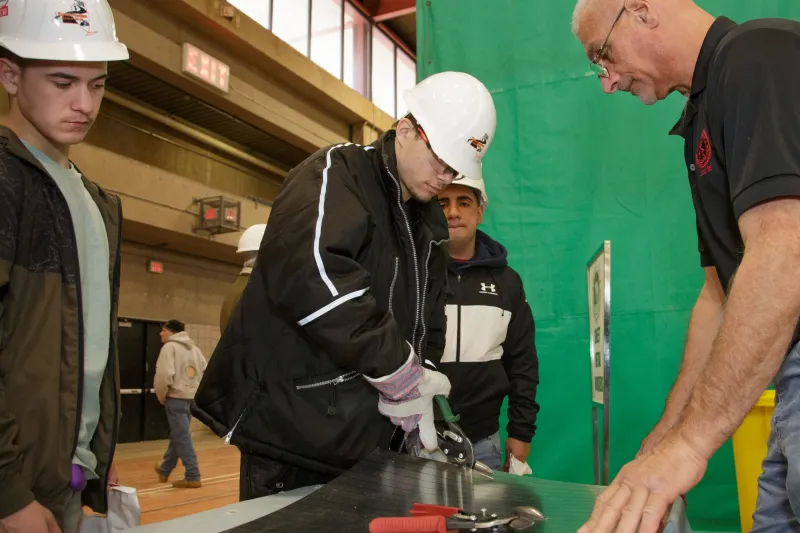
Photo: young construction apprentice wearing lanyard at trade conference exhibition hall, via ruralbuildermagazine.com
For years, the arithmetic of conference attendance in the construction industry was simple: one badge per firm, worn by the most senior person available. The managing director went, took notes, and relayed anything relevant to the site office on Monday morning. That calculation is quietly changing across the Midlands, where a growing number of contractors are now handing their delegate passes to apprentices, trainees and recent graduates — often before anyone in the boardroom books their own.
It is a shift driven partly by necessity and partly by conviction. With the region facing a well-documented skills shortfall, firms are searching for cheaper, more effective ways to retain young talent. A day at a major industry summit, some have concluded, delivers more per pound than most formal training modules.
Who Is Sending Them, and Why
Among the firms championing the approach is a Leicester-based groundworks contractor that has funded apprentice places at regional trade events for three consecutive years. The firm's contracts director describes the reasoning bluntly: "We can spend thousands on a classroom course, or we can spend a fraction of that letting our apprentices see the whole industry in one room — the suppliers, the innovators, the people arguing about the future. There's no comparison."
A Nottingham housing developer has adopted a similar policy, pairing each young delegate with a more experienced colleague for the day and asking them to report back on three things they learned. The reports, the firm says, have occasionally changed procurement decisions.
The pattern is not confined to large contractors. Several small and medium-sized firms attending past Midlands events report sending their sole apprentice — a decision that would once have been considered extravagant. For a five-person business, the thinking goes, the apprentice is not future staff; they are current staff, and development cannot wait.
What Young Delegates Actually Get From the Floor
Interviews with apprentices who have attended regional construction events reveal a consistent set of takeaways — few of which appear on the official programme.
The first is perspective. An apprentice bricklayer from Solihull described the experience of seeing a panel discussion on modern methods of construction: "On site, you just do your bit. At the summit, you see where your bit fits. It sounds obvious, but nobody had ever shown me the bigger picture."
The second is access. Conference floors are among the few environments where a trainee quantity surveyor can question a supplier directly, compare products side by side, and speak to people they would never normally meet. Several young delegates noted that exhibitors, expecting senior visitors, were often disarmingly forthcoming when approached by someone early in their career.
The third is confidence. Navigating a professional event — badge on, coffee in hand, small talk with strangers — is a skill in itself, and one that site-based training rarely develops. Firms that have sent apprentices repeatedly report noticeable changes in how those individuals carry themselves in client meetings afterwards.
Are Events Speaking to the Next Generation?
Not everyone is convinced the industry's events have kept pace with their changing audiences. Some young delegates describe programmes that feel pitched squarely at decision-makers: sessions on contract frameworks, procurement reform and policy, with little that addresses the practical questions of someone two years into an NVQ.
The criticism is not lost on organisers. Recent Midlands summits have begun introducing dedicated content — apprenticeship pathways, early-careers panels, and exhibitor stands from training providers — but the balance remains weighted toward the senior delegate. Whether that changes will depend, in part, on firms continuing to vote with their booking forms.
There are also practical barriers worth acknowledging. For site-based apprentices, a day away from the job means a day of lost output, and some smaller firms struggle to justify the absence even when the ticket itself is affordable. Travel and timing matter too: a 9am keynote in Birmingham city centre is a stretch for someone catching a 6:30am train from Derby.
A Modest Investment With Compounding Returns
The strongest argument for the apprentice ticket may be the simplest one. Construction in the Midlands will be shaped over the next decade by the people currently in their first and second years of training. Showing them the industry's ambitions, its technologies and its debates — while they are still forming their professional identities — is a comparatively inexpensive way to build both loyalty and ambition.
As one contracts manager put it: "We spend a fortune trying to attract young people into the trade. It seems odd not to invest just as much in the ones we've already got."
For event organisers, the message is equally clear. The next generation is no longer waiting outside the doors. They are walking through them — lanyards on, questions ready — and the industry's conferences will need to decide whether to meet them there.