The 9am Nail-Biter: Why Regional Contractors Wager a Full Day's Labour on One Keynote
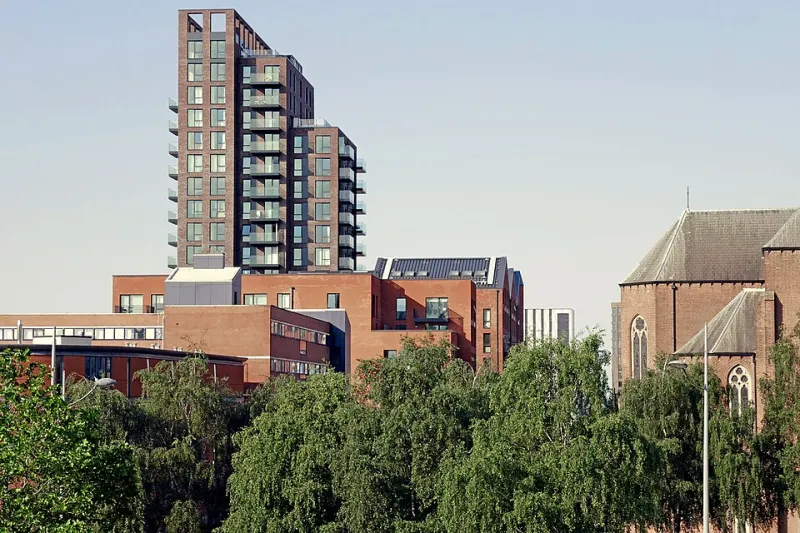
Photo: DS Pugh , CC BY-SA 2.0, via Wikimedia Commons
The True Cost of a Conference Chair
Ask a national housebuilder's commercial director to attend a keynote at the Midlands Construction Summit and the answer is a shrug. Ask the same question of a ten-person groundworks firm in Walsall and you will get a calculation, not an answer. Somebody has to cover the site. The telehandler still needs booking. The van needs fuelling. If the ganger is in a conference seat at 9.30am on a Tuesday, the morning pour does not happen on its own.
For larger contractors, event attendance is a rounding error. For the region's SMEs — which account for the overwhelming majority of construction businesses in the Midlands — it is a wager. One day of lost productivity, plus agency cover at £200-£300, plus fuel and parking, against the hope that forty-five minutes of keynote content and a corridor conversation will justify it all.
Many simply do not take the bet. That is a problem, and not only for the firms themselves.
An Agenda Built for the Delegating Class
The standard conference format was designed by and for organisations with spare capacity. Keynotes at 9.30am. Panels stacked mid-morning. Breakout sessions scattered across the working day. The implicit assumption is that someone else can hold the fort.
That assumption holds for national contractors with regional offices and layered management. It collapses entirely for the sole-trader builder in Derby, the two-director roofing firm in Coventry, or the specialist fit-out contractor in Nottingham where the MD is also the estimator, the QS and the person who answers the phone.
The result is a delegate list that skews towards the big and the comfortable — and an event that talks repeatedly about the skills gap and SME engagement while structurally excluding the very businesses it claims to want in the room.
What an SME-Friendly Summit Would Actually Look Like
The fixes are neither complicated nor expensive. They require organisers to treat the SME delegate's time as the scarce resource it is.
Shorter, denser sessions. A 30-minute keynote with a hard finish time respects a firm that has budgeted exactly one hour away from the site. Long-winded panels are a luxury of the staff-rich.
Early morning and evening slots. A 7.30am briefing before the working day, or a 5.30pm session after the last drop-off, turns attendance from a lost day into a modest detour. Breakfast briefings are already common in finance and legal sectors; construction has been slow to follow.
Genuine hybrid access. Not a static camera pointed at a podium, but proper streaming with live Q&A and a way for remote delegates to connect with exhibitors. The small contractor who cannot justify the trip should still be able to extract value — and be tempted into attending in person next year.
Clustered scheduling. If an SME sends one person, that person should be able to reach the three sessions that matter, plus the exhibitor stands they care about, inside a single half-day window. Publishing a realistic 'SME track' in advance would transform attendance maths overnight.
A Question of Who the Industry Serves
There is a fairness argument here, but there is a commercial one too. The Midlands' construction pipeline — from HS2's continuing works to the regeneration of Birmingham, Leicester and the Stoke corridor — will be delivered disproportionately by small and medium firms. If the region's flagship industry event is effectively inaccessible to them, the conversation happening inside the hall is incomplete.
The organisers of this year's Summit have made encouraging noises about flexibility, and some exhibitors now run twilight slots. But the 9am keynote remains the centrepiece of the programme, and the centrepiece tells you who the event is really for.
The next time a conference programme is drafted, it should be drawn up with a Walsall groundworks firm's diary on the desk — not a national contractor's. Until then, every 9.30am start is a quiet statement about who belongs in the room.