Bandwidth Is the New Badge: Judging a Summit by Its Signal Bars
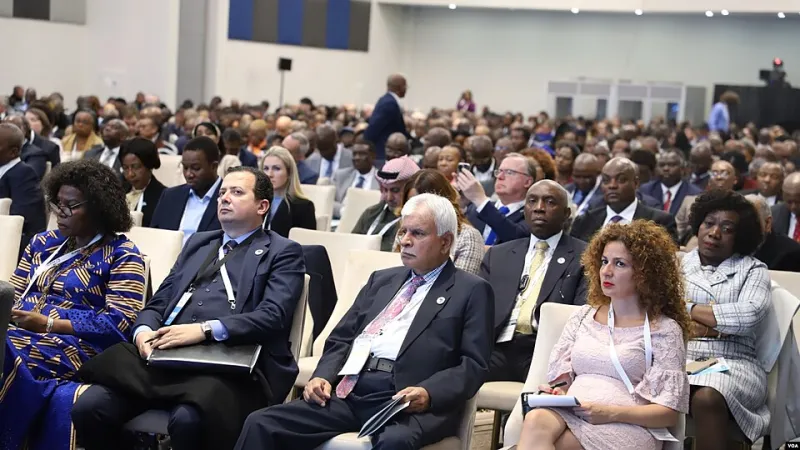
Photo: Mqondisi Dube / VOA, Public domain, via Wikimedia Commons
Ask any delegate what they remember about a disappointing trade event and they will rarely mention the keynote. They will mention the moment they stood in the middle of a exhibition hall, phone aloft like a divining rod, trying to send a single PDF to a client in Solihull while three bars flickered to none.
It is an unglamorous grievance, and that is precisely why it matters. Catering, staging and speaker line-ups are all visible investments; connectivity is invisible until it fails. How a summit organiser approaches bandwidth, therefore, tells you something honest about their priorities — and about how much they value the transactions, not just the theatre, of the day.
The Floor Is an Office Now
The modern construction delegate is not simply attending talks. They are quoting from the hall, checking supplier lead times, reviewing drawings on a tablet and negotiating terms over WhatsApp before the coffee has cooled. For an industry that has spent a decade digitising — from BIM workflows to cloud-based site management — the assumption that a conference is a connectivity-free zone is increasingly absurd.
When several thousand phones, laptops and card machines descend on one hall, consumer-grade WiFi collapses. The organisers who understand this treat bandwidth as infrastructure, in the same category as power and lighting. Those who treat it as an optional extra send a quiet message: the networking was the point; the business was incidental.
What Delegates Actually Notice
The failures follow a familiar pattern. Signal strength that evaporates the moment an auditorium fills. Guest portals that demand re-authentication every hour. Charging points clustered in one corner, claimed by 9:30am. Exhibitors running card payments over 4G because the venue's network buckles under load — and paying the data charges themselves.
None of these are catastrophes in isolation. Together, they accumulate into a judgement. A contractor comparing two autumn events in the region will not write 'poor WiFi' in a formal debrief, but the memory shapes next year's booking all the same.
The Business Case for Good Pipes
There is a commercial logic here that organisers ignore at their peril. Exhibitors increasingly measure return on investment in leads captured, and leads are captured digitally — scanned badges, photographed business cards, follow-up emails sent from the stand. If the network fails, the funnel leaks.
Moreover, the industry's own clients are watching. Housebuilders and local authorities attending regional summits are themselves digital-first organisations. An event that cannot handle their email traffic invites doubts about whether it can handle serious procurement conversations.
A Modest Standard to Meet
The remedy is neither expensive nor exotic. Sufficient access points for peak density, rather than the venue's standard provision. A network segmented so that exhibitors' payment terminals are prioritised over a delegate's video streaming. Charging provision distributed across the hall rather than hoarded at the entrance. And, crucially, someone on the organising team whose job includes testing the halls on the morning of the event, phone in hand, walking the same route a delegate will.
Summits are fond of measuring themselves in square metres of exhibition space and column inches of coverage. Perhaps the truer measure is smaller: can a delegate, standing anywhere on the floor, close a deal before lunch? If the answer is yes, the organisers have understood something fundamental. The conference is not the product. The business done there is — and every dropped connection is a tax on it.
The Verdict
Free internet is not a perk. It is table stakes for an event that claims to serve a modernising industry. The next time you walk onto a summit floor, check your signal bars before you check the programme. They will tell you everything you need to know about how seriously you are being taken.