Decoding the Lanyard: A Field Guide to Summit Job Titles
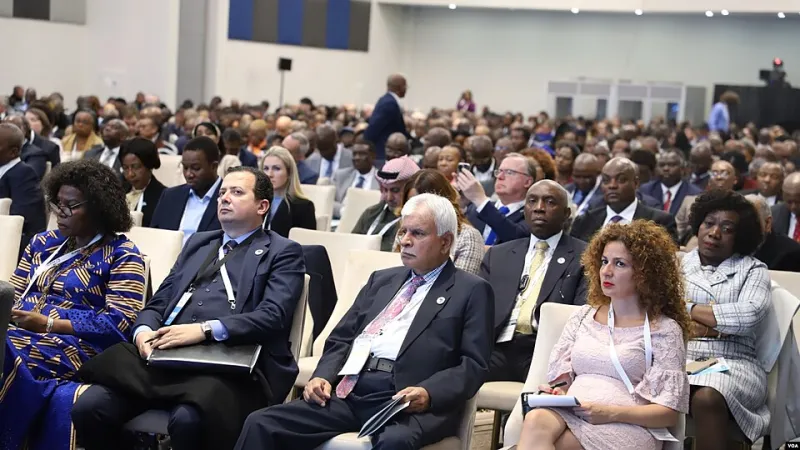
Photo: Enziee, CC BY 4.0, via Wikimedia Commons
Every September, several thousand construction professionals converge on Birmingham for the Midlands Construction Summit, and every September the same quiet ritual plays out at registration: a delegate glances down at a stranger's badge, reads a job title that might as well be written in Linear B, and hesitates for half a second before deciding whether to introduce themselves.
That half-second matters. On a show floor where a good conversation can lead to a tender invitation, the lanyard is doing more work than most business cards ever will. So what, exactly, is a 'Head of Pre-Construction Strategy' — and should you be talking to one?
The Inflation Problem
Ask around the trade bodies and procurement desks of the region and a pattern emerges. Titles in construction have been quietly inflating for the best part of a decade, mirroring trends in tech and professional services. Where a firm once had a contracts manager and a bid writer, it now fields a 'Director of Delivery Excellence' and a 'Tender Strategy Lead'.
'It's not vanity, mostly,' says one Midlands main contractor's commercial director, who asked not to be named for fear of offending his own HR department. 'Part of it is recruitment — you're fishing in the same talent pool as the consultancies, and nobody wants to be a trainee quantity surveyor when the firm down the road is offering a graduate 'Cost Strategy Analyst' role.'
There is also the small matter of LinkedIn. A grander title travels further on a feed, and a summit badge is, in effect, a physical LinkedIn profile. The result is a floor full of executives, heads, directors and — the current summit favourite — 'executors'.
A Delegator's Glossary
For the uninitiated, a rough translation service, compiled from conversations with regular attendees:
- Head of Pre-Construction Strategy — decides which jobs the firm bids for. Genuinely useful to know if you're subcontractor.
- Business Development Executor — will buy you a coffee, remember your name, and pass your details on. Rarely holds a budget.
- Director of Delivery Excellence — either a projects director with a modern rebrand, or a marketing hire. Check the second line of the badge.
- Estimating & Tendering Lead — the plain-English survivor. Knows your rates better than you do.
- Chief Growth Officer — at an SME, this usually means the managing director's spouse handles the phones.
None of this is a complaint, exactly. Titles are signals, and even inflated ones carry information — chiefly about the size and ambitions of the firm paying for the stand.
What Buyers Actually Read
The more interesting question, canvassed among the public-sector procurement delegates who attend in force, is what works. The consensus is refreshingly unfussy: decision-makers respond to titles that describe a function, not a philosophy.
'If I'm scanning a room for people who can actually sign off a subcontract, I'm looking for commercial manager, estimating director, operations director,' one framework procurement lead told us. 'If I see "Head of People and Culture Transformation", I assume it's an interesting chat but not a purchase order.'
There is a lesson there for exhibitors preparing for the next edition. A stand populated entirely by 'visionaries' and 'strategists' is a stand without anyone who can answer a technical question about a pile cap. Firms that send a deliberate mix — one strategist for the keynote circuit, one estimator for the hard conversations — consistently report better follow-up rates.
The Case for Plain English
Some in the region are pushing back. A handful of Midlands SMEs have made a point of putting straightforward titles on their badges — 'Contracts Manager', 'Finance Director', 'Site Agent' — and report that it functions as a differentiator. In a hall of inflated job titles, plain English reads as confidence.
There is a broader argument too. Construction already suffers from a translation problem between site and boardroom, between client and contractor, between the drawing and the delivered building. Adding a second layer of euphemism to the industry's own internal vocabulary hardly helps. If a delegate cannot work out from your badge what you do, the badge has failed at its one job.
None of this will stop the drift. Next year's summit will doubtless feature its first 'VP of Built Environment Futures'. But between now and then, a modest suggestion for anyone ordering lanyards: say what you do. On a show floor, clarity is still the rarest title of all.